
New Research on Chronic Inflammation and Down Syndrome Conducted in Collaboration with McGill University and TUMS Immunology Center
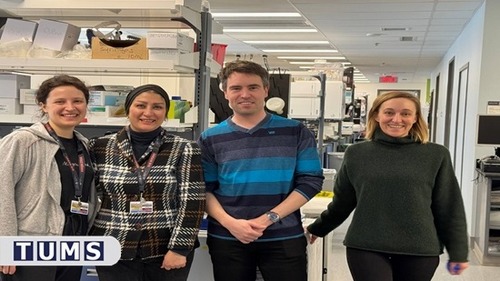
Dr. Maryam Nourizadeh, faculty member at the Immunology, Asthma and Allergy Research Institute (IAARI) of Tehran University of Medical Sciences (TUMS), is currently conducting groundbreaking research on chronic inflammation in individuals with Down Syndrome during her six-month sabbatical at McGill University in Canada. She recently shared her findings in a webinar hosted by IAARI.
The research focuses on the role of the ICOSL molecule in promoting inflammatory responses in patients with Down Syndrome. The webinar, titled "Impact of Elevated ICOSL in Down Syndrome Plasma on T Cell Cytokine Expression," was held on Saturday, February 23, 2025, at Dr. Farhudi Hall of the IAARI.
Dr. Nourizadeh began by referencing recent studies, including a pivotal article by Dusan Bogunovic et al. published in Nature, highlighting the link between chronic inflammation and autoimmune disorders in individuals with Down Syndrome. These conditions are driven by overactivation of immune cells such as CD4 T cells and CD11 B cells, resulting in the excessive secretion of more than 22 cytokines. This inflammatory state mirrors that seen in severe infections like COVID-19 but appears to be even more intense in individuals with Down Syndrome, who are also at higher risk for autoimmune diseases including thyroiditis, type 1 diabetes, celiac disease, and alopecia areata.
One molecule of particular interest is ICOSL (Inducible T-cell Co-Stimulator Ligand), which plays a central role in regulating immune responses. Dr. Nourizadeh explained that while the function of ICOSL in Down Syndrome remains largely unexplored, her project—conducted under the supervision of Dr. Donald Vinh at the Research Institute of the McGill University Health Centre (RI-MUHC)—is shedding new light on this area.
Her study examined ICOSL expression levels in the plasma of individuals with Down Syndrome compared to healthy controls. Results demonstrated a significant upregulation of ICOSL, which in turn directed the response of Jurkat T cells toward the secretion of cytokines like IL-10 and IFN-gamma, further intensifying inflammation. In addition, intracellular and surface expression of ICOSL was found to be notably higher in immortalized cells from Down Syndrome patients.
“These findings confirm that ICOSL overexpression may contribute to the pathogenesis of chronic inflammation in Down Syndrome and could serve as a potential therapeutic target,” Dr. Nourizadeh said.
She also discussed other collaborative activities at McGill University, including functional assays on immune-deficient patients. One such study compared the behavior of mutant and wild-type GFI1 genes (Growth Factor Independent 1), which are associated with neutropenia. These experiments aim to uncover the gene's role in immune cell response in culture conditions.
In addition, Dr. Nourizadeh has been actively involved with the Community and Research Engagement Committee (CREC) at the IDIGH (Infectious Diseases and Immunity in Global Health) center, contributing to the planning of educational seminars and organizing research days aimed at strengthening ties between researchers and the public.
The webinar concluded with an engaging Q&A session, where attendees discussed the implications of the research and posed questions to Dr. Nourizadeh.

comment